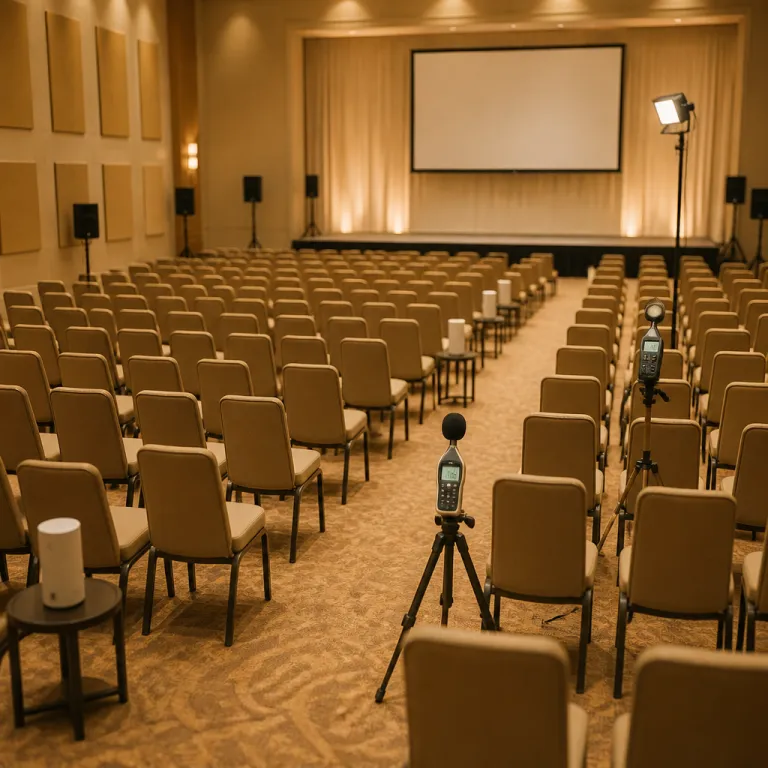
Objective first: what immersive calibration must earn in hotel event planning
Every serious hotel event planning strategy now claims to be immersive. In the real events industry, only the calibrations that change guest behaviour, learning or business outcomes deserve a line on the event management budget. For hotel general managers and event planners, the first discipline is to define which single outcome each meeting event must serve.
Start with five clear objectives for events hospitality design. Focus, recall, creative output, decompression and social connection are the only points that consistently map to measurable management KPIs in the hospitality industry. When a corporate events client sends a request proposal, the event planner should translate the brief into one primary outcome per session and then align venues, meeting rooms and event spaces accordingly.
For example, a pharmaceutical business might prioritise scientific recall in plenary events. A technology company will often value creative collaboration in breakout meetings events more than lecture style content. In both cases, the hotel and its event planners must show how light, sound and scent calibration will earn points on satisfaction surveys and long term rebook rates, not just win design awards.
This objective first framework also protects planners from production gimmicks. If a proposed tool, such as a new sensory display system, cannot be linked to better learning or networking in real time, it stays off the event packages list. The same discipline should guide how hotels book event production partners and how each planner allocates time to pre event testing.
Media MICE professionals sit at the intersection of content and hospitality. They understand that a meeting event is not only about AV reliability but about how every calibrated stimulus supports the story on stage. For them, hotel event planning becomes a form of editorial curation, where each sensory choice either strengthens or weakens the narrative arc of future events.
Light calibration: from floor plans to cognitive load in meeting rooms
Light is the most abused variable in hotel event planning. Many hotels still sell event spaces on chandelier count and ceiling height, while event planners quietly sketch alternative floor plans to chase natural light for afternoon sessions. In the events hospitality segment, the properties that win repeat corporate events are those where light calibration is treated as a cognitive tool, not a décor feature.
For focus and recall, colour temperature matters more than most venue brochures admit. Cooler white light in the 4 000–5 000 K range supports alertness during dense content events, while warmer tones help guests decompress during networking or social business formats. When planners book meeting rooms, they should ask not only about blackout capability but about tunable LED systems, dimming zones and how quickly staff will respond in real time to change requests.
Daylight remains the gold standard for many meetings events, yet it must be controlled. A hotel that can shift from full daylight to partial blackout in under two minutes will help event planners protect presentation quality without losing the psychological benefits of windows. This is where detailed floor plans, with sun path indications and screen sightlines, become a core tool for every event planner and for the hotel sales équipe handling each request proposal.
Media MICE productions add another layer of complexity. Live recording, hybrid streaming and sponsor activations all impose specific light levels on event spaces and venues, which can conflict with delegate comfort. Here, the most effective hotels integrate revenue management for group business with technical planning, aligning room blocks, meeting event schedules and AV setups so that light sensitive sessions sit in the right spaces at the right time of day ; a detailed analysis of such strategies is available in this article on AI powered revenue management for group business.
For general managers, the investment case is straightforward. A modest upgrade to tunable lighting in key meeting rooms can earn points in post event surveys, reduce complaints about fatigue and increase the likelihood that event planners will book event dates further in advance. Over several years, that long term uplift in meetings events retention often outweighs the initial capital expenditure.
Soundscapes that delegates remember for the right reasons
Sound is where many otherwise strong hotel event planning efforts quietly fail. Delegates rarely praise perfect acoustics in feedback forms, yet they always remember the events where reverb turned panel discussions into noise. For the hospitality industry, sound calibration is less about expensive speakers and more about controlling the noise floor, reverb time and transitions between zones.
In plenary events, the priority is speech intelligibility. That means short reverb times, minimal parallel hard surfaces and a sound system tuned to the spoken voice rather than to music. When event planners conduct site inspections, they should walk the event spaces while a colleague speaks from the stage, checking how words carry to the back rows and to any camera positions used for Media MICE coverage.
Breakout meeting rooms demand a different grammar. Here, the challenge is often cross talk between adjacent events, especially when hotels stack multiple corporate events along the same corridor. Simple tools such as sound masking systems, soft furnishings and door seals can dramatically improve guest focus, which in turn supports better recall of workshop content and higher client satisfaction scores.
Social events hospitality formats, from cocktail receptions to sponsor lounges, benefit from active soundscaping. Curated playlists at controlled volumes help guests judge interpersonal distance and signal energy levels, while leaving enough acoustic space for business conversations. General managers should track these sensory choices in banquet pace reporting, linking them to F&B spend and dwell time ; a detailed framework for this linkage is outlined in the analysis on banquet pace reporting and historical baselines for F&B forecasts.
For long term competitiveness, hotels must treat sound as a core part of event management, not an afterthought. When event planners know that a venue will protect their content from noise bleed and AV failures, they are more likely to book event dates in shoulder periods and to commit multi year corporate events contracts. That reliability quietly helps the property earn points with agencies and strengthens its position in the wider events industry.
Scent, SensaBubble and the thin line between signal and gimmick
Scent is the most controversial lever in hotel event planning. A subtle signature fragrance in public areas can reinforce brand memory, yet an aggressive diffuser in a conference foyer can trigger allergies and damage guest trust. For Media MICE and corporate events, the only defensible use of scent is as a precise signal at specific points in the delegate journey.
Research from the University of Bristol on multi sensory notifications illustrates both the potential and the risk. In that work, a system called SensaBubble used scented bubbles and visual projections to deliver ambient information, and the researchers summarised it clearly : "A system using scented bubbles for notifications." The same logic can be applied in events hospitality, where a gentle scent cue at entry or during transitions may help delegates encode moments in memory, but only when carefully tested with small groups first.
In practice, planners should restrict scent calibration to three zones. Entrances to key event spaces, transition corridors between plenary and breakout rooms and decompression lounges are the safest locations, because guests expect some sensory shift there. Within meeting rooms themselves, neutral air is usually the best ally of recall, especially during dense content events where cognitive load is already high.
Hotels that want to experiment with scent should treat it as a testable variable, not a permanent fixture. For one meeting event, they might introduce a very light, hypoallergenic fragrance only at the start of the day, then compare guest feedback and dwell time data with scent free future events. Any such test must be disclosed in the request proposal stage, so that the client and event planner can approve the approach and understand how it fits into the overall event planning strategy.
From a commercial perspective, scent rarely earns points directly on the P&L. Its value lies in supporting brand differentiation and in helping event planners craft memorable transitions that guests recall when they next book event dates. Used sparingly, it can reinforce the narrative of Media MICE productions ; used aggressively, it becomes an expensive distraction that the events industry will quickly reject.
Testing, measurement and the business case for sensory calibration
The final question for any hotel general manager is simple. What do scent, sound and light calibration actually deliver in conference recall that justifies their cost in hotel event planning ? The answer depends on disciplined testing, clear metrics and honest conversations with event planners and clients.
Start by selecting one sensory variable per event to test. For example, adjust light temperature across different sessions in the same meeting event, while keeping sound and scent constant, then compare guest feedback on focus and content retention. Over several future events, this controlled approach will generate enough data points to show whether specific calibrations consistently improve outcomes in your venues.
Event management teams should integrate these findings into their sales narratives. When responding to a request proposal, they can reference concrete results, such as improved survey scores or longer average session attendance, rather than vague claims about immersive experiences. This evidence based approach helps hotels earn points with sophisticated event planners who manage large corporate events portfolios and who must justify every line of the event packages budget.
On the revenue side, sensory calibration becomes a lever for both rate and volume. Properties that can demonstrate reliable recall and engagement outcomes are better positioned to negotiate premium pricing for high demand dates and to secure long term meetings events contracts with Media MICE agencies. Detailed guidance on how commissionable rate strategies support this positioning is explored in the analysis of commissionable rate strategies and Media MICE performance for hotels and agencies.
Finally, sensory design must integrate with broader commercial strategy. Tools such as AI enhanced forecasting, group revenue optimisation and real time space utilisation dashboards help general managers align event spaces, meeting rooms and guest room inventory with the most profitable business mix. When sensory calibration is treated as part of this system, rather than as an isolated design project, it will consistently earn points in both guest satisfaction and owner level ROI, turning hotel event planning into a genuine competitive advantage.
FAQ
How can I test sensory calibration without risking a key client event ?
Limit experiments to one variable per event, such as light temperature in breakout rooms, and apply it only to a subset of sessions. Inform the client and event planner in advance, collect structured feedback from guests and compare results with similar past events. This controlled approach protects the meeting event while still generating useful data for future planning.
Which sensory factor has the biggest impact on conference recall ?
For most conferences, light and sound have a larger impact on recall than scent. Good speech intelligibility and appropriate light levels reduce cognitive fatigue, allowing guests to process and retain more information. Scent can support memory at specific transition points, but it should remain secondary to visual and auditory clarity.
Are immersive technologies like scented bubble displays relevant for hotel events ?
Systems such as SensaBubble show how multi sensory notifications can deliver information in subtle ways. In hotel contexts, similar concepts may work for wayfinding, sponsor activations or timed alerts in Media MICE productions. Any deployment should be small scale, clearly explained to clients and evaluated against concrete engagement metrics.
How should sensory design differ between plenary sessions and networking events ?
Plenary sessions require neutral scent, controlled light and highly intelligible sound to support focus and recall. Networking events benefit from warmer light, more dynamic soundscapes and slightly higher ambient noise to encourage social interaction. Treat each format as a distinct environment with its own sensory grammar rather than applying one design across all event spaces.
What data should hotels track to prove the value of sensory calibration ?
Hotels should track guest satisfaction scores, session attendance patterns, dwell time in key zones and rebook rates for similar events. Linking these metrics to specific sensory setups in meeting rooms and venues helps build a credible business case. Over time, this evidence supports pricing decisions and strengthens the hotel’s position with event planners and agencies.