From ballroom-first to format-first: resetting your venue marketing strategy
From ballroom-first to format-first: resetting your venue marketing strategy
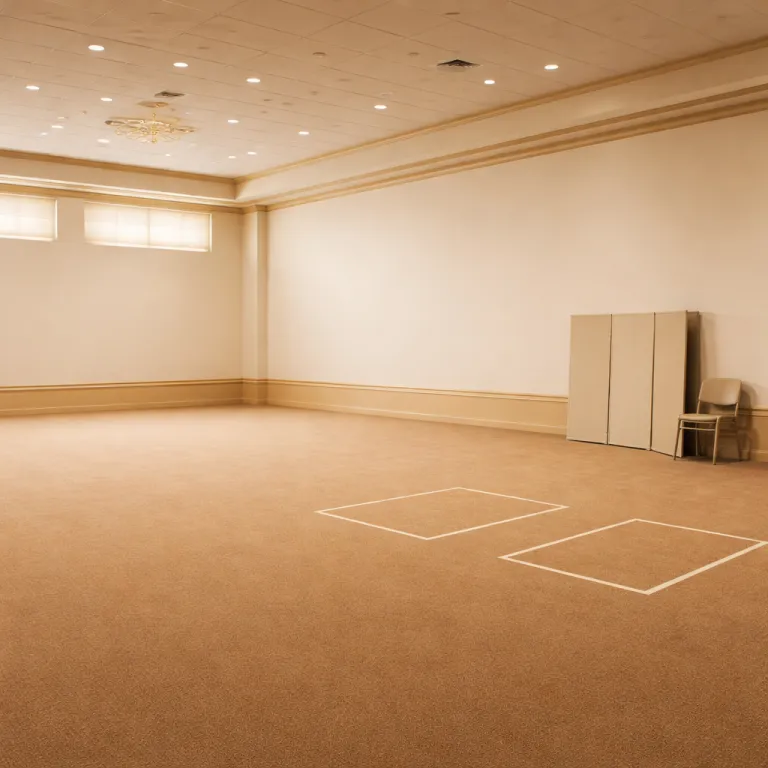
Every venue marketing strategy that still opens with ballroom size is already on the back foot. When research from the PCMA Convene Meetings Market Survey 2024 shows that more than half of event planners are actively testing non-traditional venues (PCMA Convene, 2024, Nontraditional Venues section), the event venue that leads with dimensions signals it has not listened to how events have changed. The winning strategy now starts with the event format, the target audience, and the business outcome your venue will help deliver.
For senior venue owners and commercial leaders, this means reframing every marketing plan, every sales deck, and every piece of social media content around what the event is trying to make happen. Your venue marketing narrative should describe how your event management team supports sustained collaborative work, complex plenary-then-multi-stream agendas, and hybrid events that blend in-person and digital marketing touchpoints. The question is no longer whether your event venues can host 800 delegates, but whether your marketing strategies can convince event planners that those 800 people will stay engaged, awake, and connected to the event objectives.
Industry data already underlines the shift away from square footage as the primary filter for events. The MPI Meetings Outlook 2024 reports that attendee experience and event design consistently outrank raw capacity as selection criteria, with roughly four out of five planners ranking experience as their top priority (MPI Meetings Outlook, Spring 2024, Planner Priorities table). When more than four out of five planners say attendee experience is their top priority, a venue marketing strategy that still lists floor plans before outcomes simply misses the brief.
For MICE players in hospitality, this is not a theoretical debate about marketing. It is a hard commercial question about which venues will still be on the longlist when event planners compare an event venue with a flexible virtual tour and strong media platforms against a convention hotel that only pushes capacity charts. Your website, your social channels, and your email marketing sequences must show how your venue marketing supports the full event lifecycle, not just the room allocation grid. The venues that win will be those whose marketing strategy speaks the language of formats, flows, and human energy, not only square metres.
Rebuilding this strategy starts with the proposal flow itself, long before you run any ads or update your website. When an RFP lands, the first questions from your sales team should be about the event agenda, the rest cycle, and the social and networking expectations, not about how many event venues you can bundle into a package. Only then should you match specific floor plans, breakout rooms, and pre-function spaces to the event marketing goals and the target audience profile. This is where a format-first venue marketing strategy becomes a commercial advantage rather than a branding slogan.
Designing for outcomes, not dimensions: how MICE reshapes destination marketing
Destination and venue marketing in the MICE segment now lives at the intersection of content, design, and logistics. A convention hotel in Bangkok or Washington, D.C. that still promotes itself only as an event venue with the largest ballroom in the city is competing against destinations that sell narrative, not numbers. The destinations winning high-impact events are those whose marketing strategy shows how the city, the venues, and the local ecosystem combine to support specific event formats and media coverage.
For offices of tourism and destination marketing organisations, this means building a coordinated digital marketing plan with venues, hotels, and local partners. Your shared venue marketing strategy should highlight how the city’s transport, public spaces, and cultural assets support events that run on tight time windows and complex media schedules. When you promote a congress or incentive, the content on your website and social media platforms must show how planners can move delegates efficiently, stage media moments, and still protect the time needed for networking and business meetings.
In practice, this requires a new kind of event marketing content that goes far beyond the classic skyline shot and ballroom photo. Destinations that perform strongly in MICE now publish agenda-based sample itineraries, annotated floor plans, and short virtual tour clips that show how an event flows from plenary to breakouts to social events. They also integrate links to specialist analysis, such as guidance on choosing the good time to visit Thailand for high-impact MICE and media events, to help planners align climate, seasonality, and media cycles.
For hotel groups, the implication is clear: your venue marketing must plug into the broader destination story rather than operate as a standalone brochure. Event planners want to see how your event venues connect to the city’s transport nodes, media hubs, and social districts, because that is where their potential clients will judge the event’s success. A strong marketing plan therefore maps your event spaces to specific event types, from product launches needing fast media access to association congresses that require quiet zones for committee work.
This is where MICE media coverage and partnerships with event planning associations become powerful marketing platforms. When your venue marketing strategy includes case studies co-created with event planners and local media, you move from generic promotion to evidence-based storytelling. Over time, this builds trust with clients who care less about the exact square footage and more about whether your venue, your city, and your partners can help them stage events that land with their audience and their leadership.
Rewriting the MICE proposal: from square footage grid to format narrative
The standard MICE proposal still opens with a table of event venues, capacities, and floor plans, followed by a rate card. That structure made sense when procurement teams judged venues mainly on room blocks and catering minimums, but it fails in a market where corporate buyers have explicit permission to choose unconventional venues without lengthy justification. When the PCMA Convene Meetings Market Survey 2024 reports that a growing share of planners are exploring non-traditional venues, rising from roughly one third to just over half of respondents in a single planning cycle (PCMA Convene, 2024, Market Trends section), a ballroom-first proposal reads like a relic.
The counter-argument is familiar: buyers still ask for square footage, and RFP templates still demand capacity charts. That is true at the data collection stage, but your sales conversation and your venue marketing content are different channels from the RFP grid. The proposal that event planners remember is the one that opens with a clear narrative about what the event is trying to make happen and who the buyer is trying to impress, then shows how your event venue and your event management team will help deliver that outcome.
To operationalise this, start every response with two explicit questions and build your marketing strategy around the answers. First, what transformation should delegates experience between arrival and departure, in terms of knowledge, relationships, or decisions? Second, which stakeholders must be impressed — C-suite leaders, sponsors, media, or local partners — and what will success look like for them? Only after you have those answers should your venue marketing strategy introduce specific rooms, capacities, and technical specifications.
In this format-first model, the old pitch lines need to disappear from your marketing content and your sales scripts. Claims such as “largest ballroom in the market”, “5,000 square foot pre-function”, or “6,000 square foot column-free” are not strategies; they are raw data that belong in an appendix or on a technical sheet. The main body of your proposal, your website copy, and your social media posts should instead describe how your event venues support sustained collaborative work, plenary then six-stream parallel sessions, or day-long programmes with integrated rest cycles and wellness rooms.
There is a strong defensive play here for traditional venues that worry about non-hotel competition. Non-traditional venues often have logistical gaps in areas like rigging, AV redundancy, and back-of-house circulation, and that is the position you should defend. Use your venue marketing to show how your event management infrastructure, your best practices on delegate flow, and your proven media platforms for hybrid events reduce risk for planners, while still delivering the immersive design they now expect. For a deeper analysis of how this shift is playing out, the industry discussion on why planners explored non-traditional venues and why your ballrooms cannot answer with more square footage is essential reading.
Turning digital touchpoints into planner-grade proof: media, data, and best practices
If square footage is no longer your opening pitch, your digital marketing ecosystem becomes the primary stage for your venue marketing strategy. Every touchpoint — from your website to your social media channels and email marketing flows — must function as a planner-grade toolkit rather than a glossy brochure. Event planners should be able to understand, in a few clicks, how your event venues handle complex agendas, media requirements, and delegate wellbeing.
Start with the website, because it remains the core search engine destination for potential clients researching a venue or destination. Replace static floor plans with interactive maps that show traffic flows, daylight, acoustic zones, and F&B positions over time, so planners can visualise how their events will actually run. Layer in short virtual tour segments that focus on operational realities — rigging points, cabling routes, camera positions — rather than only the hero shot of the ballroom.
Your social media and media platforms should then amplify this operational storytelling instead of repeating brochure language. Use short-form content to show room turns between events, behind-the-scenes clips of event management teams solving real problems, and annotated photos that explain why a particular breakout room works for high-focus workshops. This kind of content helps clients and event planners trust that your venue owners and on-site teams understand the pressures of live events, from tight build times to last-minute programme changes.
Email marketing remains underused in venue marketing, yet it is one of the most effective ways to nurture a target audience of planners and corporate buyers. Instead of generic seasonal offers, send tightly curated content that aligns with specific event marketing needs, such as sample agendas, annotated case studies, or links to analysis on delegate wellness rooms that RFPs increasingly require. Each campaign should have a clear marketing plan that segments potential clients by sector, event type, and decision cycle, then offers them relevant best practices rather than only rate promotions.
Finally, integrate wellbeing and rest cycle design into your venue marketing strategy as a core differentiator, not a side note. Meeting and event professionals are under pressure to show that their events protect delegate health, attention, and social connection, and they are actively searching for venues that can help. Detailed content on topics such as delegate wellness rooms and rest-friendly layouts, supported by real case studies and transparent data, will position your venue as a partner in outcomes, not just a supplier of space.
Key figures reshaping venue marketing for MICE
- Average ballroom size in many established MICE venues is commonly benchmarked around 5,000 square feet in industry audits, yet this metric alone no longer predicts event success when planners prioritise experience and design. Venue teams should therefore move detailed capacity figures into a technical appendix or downloadable spec sheet so that the main marketing copy can stay focused on outcomes and attendee experience.
- Surveys of event planners, including the MPI Meetings Outlook 2024, indicate that around 80–85% now rank attendee experience as their primary decision factor (MPI Meetings Outlook, Spring 2024, Planner Priorities table), which reinforces the shift from capacity-led selection to format- and outcome-driven venue marketing.
- Industry trend analysis from the PCMA Convene Meetings Market Survey 2024 shows that a growing share of planners are exploring non-traditional venues, rising from roughly one third of respondents to just over half within a single planning cycle (PCMA Convene, 2024, Nontraditional Venues section), which increases competitive pressure on traditional event venues to rethink their marketing strategies.
- Programme outlines for MICE education sessions at IMEX Frankfurt and similar trade shows increasingly allocate more than half of the agenda to topics such as experiential design, technology integration, and attendee engagement (IMEX Frankfurt, 2023–2024 education programme overview), signalling that square footage discussions are being displaced by content and format conversations.
Expert references
- Global Convention Centre Benchmarking Report 2023 – independent benchmarking on MICE venue performance, ballroom sizing, and utilisation patterns, including comparative data on average plenary capacities and breakout ratios.
- MPI Meetings Outlook 2024 – quantitative insights into planner priorities, attendee experience metrics, and venue selection criteria, with specific tables on experience-first decision-making and non-traditional venue adoption.
- PCMA Convene Meetings Market Survey 2024 – detailed analysis of non-traditional venue adoption, proposal expectations, and buyer behaviour, including sections on RFP content, format preferences, and hybrid event requirements.
- IMEX Frankfurt conference programme – thematic focus on event design, format-driven venue selection, and case studies of high-impact MICE events, with session tracks dedicated to experiential design, technology, and attendee engagement.