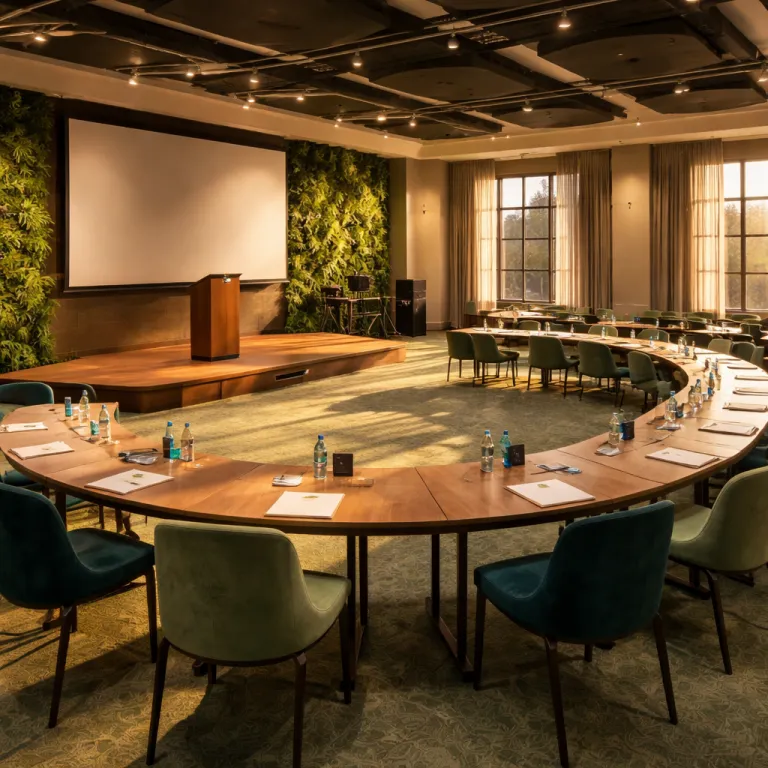
From square metres to decision metrics: how hotel meeting rooms are really shortlisted
Hotel meeting rooms are no longer sold on a single ballroom photo. Planners evaluating a venue in a dense city such as Dallas or New York City now benchmark each meeting space against a grid that mixes technology, wellness, ESG and operational resilience. For a general manager, the shift means every room, from the largest event space to the smallest private space, must be described with hard data rather than brochure language.
In Média MICE coverage, the most competitive hotel properties treat each meeting room as a product line with its own P&L, guest satisfaction scores and clear positioning. A 5 000 sq ft space used as a flexible plenary or ballroom is documented very differently from a 40 sq m boardroom designed for senior board meetings with high speed connectivity and discreet service. The question is no longer whether a room offers enough chairs for accommodating people, but whether that room is perfect for a specific meeting format, hybrid configuration and content workflow.
Planners running meetings events over three days want to know how each room performs hour by hour. They ask which meeting spaces receive natural light in the morning versus the afternoon, how close each room is to a bar or coffee point, and whether the living room style lounge can be flipped into a private event space in under 30 minutes. When a hotel in Dallas or near Madison Square Park in New York City responds to a MICE RFP, the spec sheet that wins now reads like an engineer’s logbook, not a lifestyle brochure.
The new hard specs: acoustics, AV redundancy and connectivity that never blinks
Across Média MICE interviews, planners repeat the same frustration with hotel meeting rooms that look impressive but fail on sound and signal. They no longer accept vague claims about sound dampening; they want measured reverberation times, background noise levels and proof that a meeting space can handle simultaneous hybrid sessions without echo or bleed. In practice, this means documenting each room, from the main ballroom to the smallest private space, with acoustic test data and AV diagrams that show, for example, target RT60 reverberation times between 0.6 and 0.9 seconds for speech and background noise below 35 dBA during sessions, in line with typical recommendations from building acoustics guides.
For a GM, the spec sheet should show at least two AV redundancy paths per key event space, including backup projectors, spare microphones and a clear failover plan for streaming. A simple diagram might map primary and secondary signal chains from stage to switcher to encoder to displays, with labelled backup power and network routes. When a hotel sales manager responds to a MICE RFP for a three day conference, the document that moves the needle explains how the event coordinator will route signals between rooms, how high speed internet is guaranteed per delegate and how bandwidth is allocated by meeting. Connectivity specs must go beyond a single Wi Fi number and detail bandwidth per square metre, floor density and 5G coverage by zone, for instance 10 to 25 Mbps of dedicated capacity per attendee for hybrid events, as suggested in recent hospitality tech benchmarks.
Corporate guests now expect hybrid events as standard, so the hotel that wins the venue decision is the one that can show integration with event planning platforms and RFP management software. A practical move this week is to run the group sales audit on convention hotel readiness and translate the findings into room level specs. When your meeting spaces spec sheet reads like an engineer’s checklist, planners stop asking basic questions and start talking about multi year events.
Natural light, wellness inventory and the real value of flexible layouts
Wellness has moved from spa brochures into the core evaluation of hotel meeting rooms. Corporate buyers now ask which rooms have natural light, what type of circadian friendly lighting is installed and how far each meeting space sits from elevator noise or service corridors. A property that maps its rooms by daylight exposure, noise profile and air quality will outperform a venue that only lists square metres and ceiling height.
In practice, this means tagging every room as a space ideal for specific formats and times of day. A corner room with stunning views over a park might be positioned as the room perfect for afternoon strategy meetings, while an interior room with no windows but excellent acoustics becomes the preferred space for confidential board meetings or recording sessions. When planners review meeting spaces, they look for a mix of flexible rooms that can be reconfigured quickly, with furniture that supports both classroom and living room style layouts.
Wellness also touches circulation and breakout design. Delegates move between plenary sessions, smaller meetings events and informal networking in the bar or dining room, so the GM should document walking distances, stair and lift access and the availability of quiet private space for one to one conversations. For a deeper operational lens on how to rate each breakout, the breakout room audit on acoustics, AV reliability and natural light offers a practical framework that can be adapted to any city hotel, from Dallas to New York City.
F&B that keeps people awake: catering, private dining and beverage logistics
Food and beverage specifications now sit on the same line as bandwidth in many MICE RFPs. Planners know that the right catering strategy can rescue a long day of meetings, while poor timing or inflexible menus can derail even the best content. Hotel meeting rooms that win repeat events are those supported by a kitchen and service flow designed for speed, dietary diversity and minimal disruption.
For the GM, this means documenting whether each event space is served by a private kitchen or a shared back of house corridor, and how many guests can be served within a 15 minute window. A dining room that doubles as a private space for executive lunches should be described with clear data on seating layouts, service ratios and how quickly it can flip back into a breakout room. Beverage timing flexibility matters as much as menu creativity; planners want to know if coffee can be refreshed silently during a meeting, if a bar can be activated for a networking hour near the main venue and whether late night service is possible without disturbing sleeping guests.
In urban markets such as New York City, where space is tight and events often run back to back, the ability to turn a living room style lounge into an evening event space with light catering is a competitive advantage. The spec sheet should explain how many people each configuration can handle, which rooms are best for stand up receptions versus seated dinners and how the hotel manages traffic between meetings events and public areas. When F&B logistics are described with the same precision as AV and high speed connectivity, planners see a property that understands the full delegate journey.
ESG, emissions reporting and the RFP sections that now decide the shortlist
Environmental, social and governance criteria have become gatekeepers in corporate procurement tools. Many MICE buyers will not even read a proposal from a hotel if the emissions reporting section is incomplete or generic. For meeting spaces, this means the GM must work with engineering and finance to quantify energy use, waste streams and carbon intensity per room and per event type.
Instead of a single sustainability paragraph, the winning spec sheet breaks down data by meeting room and event space. Planners want to see how a large ballroom compares with smaller rooms in terms of energy per guest, how natural light reduces artificial lighting hours and how catering choices affect waste volumes. When a hotel can show that a space ideal for board meetings uses LED lighting, efficient HVAC and local sourcing for F&B, it becomes easier for buyers to justify the venue to internal ESG committees.
Destinations and venues that appear regularly in Média MICE coverage, from Dallas convention hotels to properties near Times Square or Madison Square Park, are starting to package this data in planner friendly dashboards. A strong move is to align your reporting format with the templates used by major event planning platforms, so that emissions data from meetings events can be imported directly into the client’s reporting tools. This level of transparency turns hotel meeting rooms into measurable assets in the client’s sustainability strategy, rather than a vague line item.
The self audit: how a GM can upgrade the hotel MICE pack this week
Every general manager running a 100 to 500 room hotel can start by auditing the current MICE collateral. Remove vanity metrics from the first page, such as maximum capacity figures that ignore realistic seating densities, and replace them with the specifications planners actually use. The dataset from hotel design manuals still matters, but it must be contextualised with operational detail.
Two questions from those manuals remain surprisingly relevant to Média MICE readers: “What is the ideal meeting room size?” and “What ceiling height is preferred?”. The verified answers — “Approximately 5,000 sq ft for flexibility.” and “Minimum of 12 ft for spaciousness.” — are consistent with long standing guidance from hotel design references such as the Hotel Planning and Design handbook and comparable hospitality architecture texts, and should appear in your spec sheets, but always alongside data on acoustics, AV redundancy, natural light and wellness inventory. A 5 000 sq ft meeting space with poor sound and no high speed connectivity will now lose to a smaller, better engineered room that is perfect for hybrid meetings events.
Use a simple checklist to review each meeting room and event space this week. Confirm that every room offers documented bandwidth per delegate, clear diagrams of versatile space layouts, and honest photos that show real seating rather than empty halls. Then update your digital RFP responses so that the hotel sales manager and event coordinator can answer planner questions in minutes, not days, and link to deeper market analysis such as the coverage of Asian destination pushes and their impact on Western convention hotels. When your hotel meeting rooms are presented with this level of precision, you stop competing on rate alone and start winning on measurable value.
Key statistics that reshape hotel meeting room specifications
- For plenary halls and ballrooms, a meeting room size around 5 000 sq ft remains a common benchmark for flexible plenary spaces in many convention hotels, according to long standing hotel design manuals that still guide new builds, including widely cited references such as Hotel Planning and Design and similar architectural standards.
- A minimum ceiling height of 12 ft is widely preferred for major meeting spaces, as it improves sightlines, air circulation and perceived spaciousness for guests during long events, and aligns with recommendations in hospitality design guides used by international brands.
- Recent hospitality tech studies, such as the Cvent Planner Sourcing Report (2023) and comparable surveys from major event technology providers, indicate that around 40 % of planners rate technology automation as the single most important improvement hotels can make, which directly affects how they evaluate AV, connectivity and hybrid capabilities in meeting rooms.
- Industry trend reports from organisations like the Global Business Travel Association and wellness focused research by hotel groups suggest that roughly 76 % of corporate guests value wellness activities during meetings events, pushing hotels to document natural light, quiet zones and wellness friendly layouts in every meeting space.
- Sector analyses from specialist media highlight that ESG and emissions reporting have become default gatekeepers in MICE RFPs, meaning incomplete sustainability data can remove a hotel from consideration before rates are even reviewed, as echoed in procurement guidance from large multinationals.
FAQ: hotel meeting rooms and MICE RFP specifications
What is the ideal size for a flexible hotel meeting room?
For large plenary sessions or multi purpose events, many design references still point to approximately 5 000 sq ft as an ideal size for flexibility. This footprint allows planners to switch between theatre, classroom and banquet layouts while maintaining comfortable circulation for guests. Smaller rooms remain essential for breakouts and board meetings, but the main space should hit this benchmark where possible.
How high should ceilings be in modern meeting spaces?
A minimum ceiling height of 12 ft is generally preferred for major meeting rooms. Higher ceilings improve sightlines for screens, reduce the feeling of crowding and support better acoustics when combined with proper treatment. For hybrid events, extra height also helps with rigging cameras, lighting and speakers without obstructing views.
Which technology specifications matter most in MICE RFPs now?
Planners focus on guaranteed high speed connectivity per delegate, AV redundancy paths and integration with event platforms. They expect clear data on bandwidth per square metre, the number of simultaneous streams supported and backup options if primary systems fail. A hotel that documents these specs room by room will outperform a venue that only lists total property bandwidth.
How should hotels present wellness features in meeting rooms?
Wellness features should be mapped and quantified for each meeting space. This includes natural light exposure by time of day, noise levels, air quality measures and proximity to quiet breakout or outdoor areas. Presenting this as a wellness inventory helps planners match specific rooms to the energy needs of each session.
Why is emissions reporting now critical in MICE venue selection?
Corporate procurement teams increasingly use ESG criteria as hard filters in their venue selection tools. Hotels that can provide emissions data per event, broken down by meeting room, energy use and catering choices, make it easier for clients to meet internal sustainability targets. Without this level of reporting, even well located venues risk being excluded from shortlists.