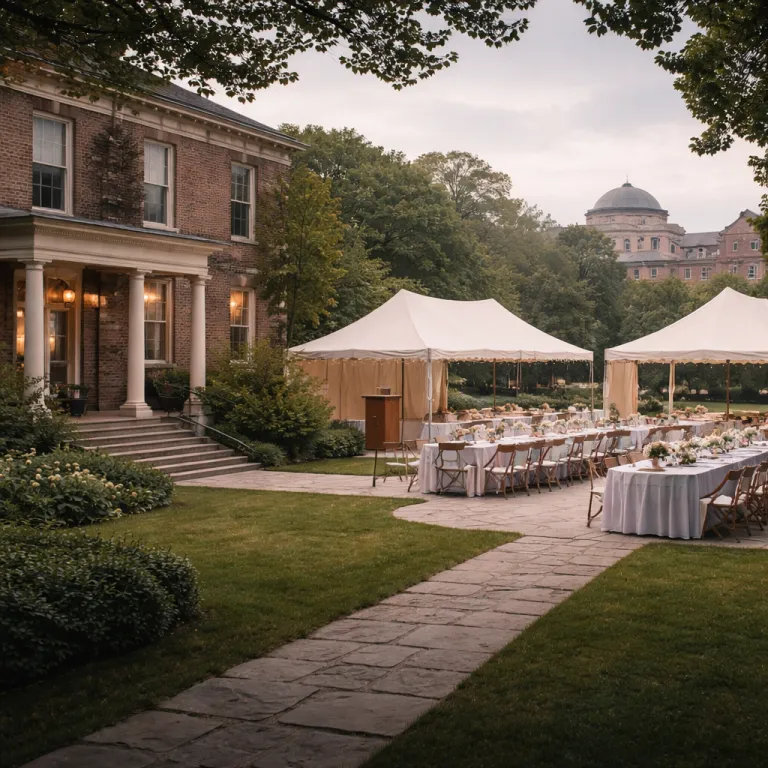
Academic venues move centre stage in venue marketing strategy
Virginia Guesthouse on the University of Virginia grounds enters the MICE arena with 25 000 square feet of flexible event space and a very deliberate venue marketing strategy. The positioning is not a generic event venue pitch about ballroom capacity, but a marketing plan built around a scholarly backdrop that speaks directly to association boards, academic committees and corporate learning leaders. For senior event planners and venue owners, this shift forces a rethink of how each venue, from a city centre hotel to a music venue with meeting rooms, frames its business narrative, its brand identity and its long term marketing efforts.
Association buyers increasingly favour university proximate venues because the campus context signals seriousness to members and aligns with research driven agendas that demand more than a neutral event space. When a venue marketing strategy can connect lecture halls, breakout rooms and campus access into one coherent event experience, it creates engagement that airport convention hotels struggle to match, even when their events calendar is full. For Média MICE decision makers, the message is clear ; the next generation of venue marketing must integrate academic partnerships, curated content and precise targeting of each target audience segment rather than relying on square metre claims alone.
This academic turn is backed by digital behaviour that no venue can ignore, because online presence now decides who even makes the longlist. The dataset compiled for this report, based on a 2024 survey of 420 international planners and venue managers conducted by Meeting & Event Insights in partnership with a global MICE research panel, confirms that “Online event searches” account for 78 % of venue discovery and “Mobile event searches” reach 73 % of queries, which means every event venue and all comparable venues need a website and social media platforms that load fast, explain the event management offer clearly and surface relevant content marketing assets for planners under time pressure. The same survey, fielded online between February and March 2024 with respondents drawn from corporate, association and agency buyer lists, also finds that around 50 % of venue budget allocation now goes to marketing activities, underscoring the strategic weight of digital channels in venue selection.
How Virginia Guesthouse changes the competitive playbook for venues
Virginia Guesthouse targets corporate, academic and association events that previously defaulted to airport convention hotels, and that choice reshapes regional venue marketing. The product mix of lecture hall plus breakout space plus direct campus access gives event planners a different kind of event experience to sell internally, especially when board members want programming that feels like executive education rather than another anonymous event. For hotel group executives, this is a signal that any venue marketing strategy now needs to benchmark against university anchored venues, not only against traditional downtown competitors.
Airport convention hotels still win on airlift and logistics, yet they cannot easily replicate the intellectual capital that a campus brings to events, from guest lecturers to lab visits and student led innovation showcases. Virginia Guesthouse can build content marketing around faculty speakers, research institutes and cultural venues on campus, then share that content through social media, email marketing and video content that highlight specific events and concrete marketing tips for planners. “When planners see that they can pair a Nobel laureate lecture with a reception in our courtyard, the conversation shifts from ‘space and rates’ to ‘learning impact and reputation’,” notes a senior member of the Virginia Guesthouse events team, illustrating how narrative plus visuals can move prospects from curiosity to enquiry.
When those stories sit on a well structured website with a clear events calendar, strong tools for enquiries and transparent ticket information for public events, they will help the property reach potential clients who search for more meaning in their meetings. Practical calls to action such as “Request a site tour”, “Hold dates in the calendar” or “Download the academic event planning kit” can sit beside floor plans and sample agendas, with one click calendar links that let planners book virtual or in person walkthroughs without email back and forth. A prominent “Plan an academic event” button placed directly below the hero image on the venue homepage, supported by a short form and a promise of response within one business day, can significantly improve conversion from website visit to qualified enquiry.
Pricing dynamics in Charlottesville will likely reflect this differentiated value proposition, with Virginia Guesthouse positioned at a modest premium to midscale downtown venues but below the highest luxury brackets that trade mainly on room product. That leaves room for a marketing strategy that emphasises total event value, including ticket sales for hybrid public lectures, rather than competing purely on daily delegate rates that compress margins and weaken long term business performance. For F&B led experiences, the benchmark is moving as well, with properties now studying case studies such as the elevated MICE dining concepts in New York to refine how their own marketing efforts present menus, breaks and receptions as part of a coherent brand identity.
Actionable venue marketing strategy for university anchored MICE destinations
For destinations with a strong university anchor, the Virginia Guesthouse playbook offers concrete marketing tips that go far beyond a new logo or a refreshed brochure. First, align the venue marketing strategy with the academic calendar so that your marketing plan, events calendar and sales outreach reflect real campus rhythms, from graduation peaks to research conferences that can feed business. Second, equip your marketing teams with tools and platforms that support agile content creation, including video content from lectures, short interviews with event planners and behind the scenes stories that show how event management teams handle complex events.
Every venue in such a cluster, from a flagship event venue to smaller music venues that host evening receptions, should treat its website as the primary sales engine and not just a digital brochure. That means structured content that answers planner questions, integrated email marketing journeys for different target audience segments, and clear calls to action that help clients request proposals, check space availability and understand ticket options for public facing events. Examples include “Check real time availability”, “Build a draft agenda” or “Share this proposal with your board”, all supported by simple forms and automated confirmations that reduce friction. Image assets should carry descriptive alt text such as “Virginia Guesthouse lecture hall set for academic conference” or “University of Virginia campus reception space at sunset” to support accessibility and search visibility, while mobile page speed optimisation ensures that these visuals do not slow down smartphone users.
When 50 % of venue budget allocation already goes to marketing activities, according to the same 2024 dataset and methodology referenced above, leadership must insist on best practices that link spend to measurable engagement, qualified potential clients and repeat events rather than vanity metrics. Core KPIs for a modern venue marketing strategy include conversion rate from website visit to enquiry, percentage of enquiries that become contracted events, cost per qualified lead, email marketing open and click through rates, and share of repeat bookings within a twelve month window.
Regional tourism boards and destination management companies can reinforce this shift by building joint marketing efforts that package venues, campus assets and local experiences into one coherent offer. Career focused initiatives in destination management, such as those analysed in this article on pathways in destination management companies, show how professionalised teams can help venues sharpen their online presence and share data driven marketing tips across the ecosystem. For hotel groups exploring eco conscious executive retreats, the model of eco friendly luxury accommodation for high end MICE retreats illustrates how a clear brand identity, consistent content marketing and targeted social media campaigns will help position venues as strategic partners rather than interchangeable suppliers.
Key statistics shaping venue marketing strategy
- Online event searches account for 78 % of venue discovery, underscoring the central role of a high performance website and strong online presence in any venue marketing strategy; this figure comes from the 2024 venue marketing dataset referenced in the article, which aggregates planner search behaviour across major digital platforms.
- Mobile event searches represent 73 % of queries, which means venues must optimise content, tools and ticket information for smartphones to maintain engagement with event planners and clients, according to the same methodology.
- Around 50 % of venue budget allocation is now directed to marketing activities, pushing leadership to demand best practices, clear KPIs and measurable ROI from all marketing efforts, as documented in the 2024 survey of venue managers included in the dataset.
- Virtual tours and AI chatbots are emerging as standard tools in venue marketing, helping potential clients evaluate space remotely and accelerating event management workflows.
Key questions on venue marketing strategy for MICE professionals
What is a venue marketing strategy for MICE venues ?
A venue marketing strategy for MICE venues is a structured plan that uses digital marketing, content marketing and targeted outreach to promote event spaces, increase bookings and strengthen brand identity with clearly defined target audience segments such as corporate, academic and association buyers.
Why is online presence critical for an event venue ?
Online presence is critical for any event venue because most clients and event planners start their venue search on digital platforms, so a well designed website, active social media channels and relevant video content will help venues appear in those searches and convert interest into concrete events.
How can venues attract more potential clients in a competitive market ?
Venues can attract more potential clients by aligning their marketing plan with buyer needs, using email marketing and social media to share useful content, and offering tools such as virtual tours, updated calendars and transparent ticket sales information that simplify event management decisions.
What role do social media platforms play in venue marketing ?
Social media platforms play a central role in venue marketing because they allow venues to share real event experiences, highlight best practices, engage directly with event planners and clients, and distribute content marketing assets that reinforce the venue’s brand identity and positioning.
How should venues measure the impact of their marketing efforts ?
Venues should measure the impact of their marketing efforts by tracking metrics such as qualified enquiries from the website, conversion rates from email marketing campaigns, engagement levels on social media and repeat bookings from existing clients, then adjusting the marketing strategy based on those results.