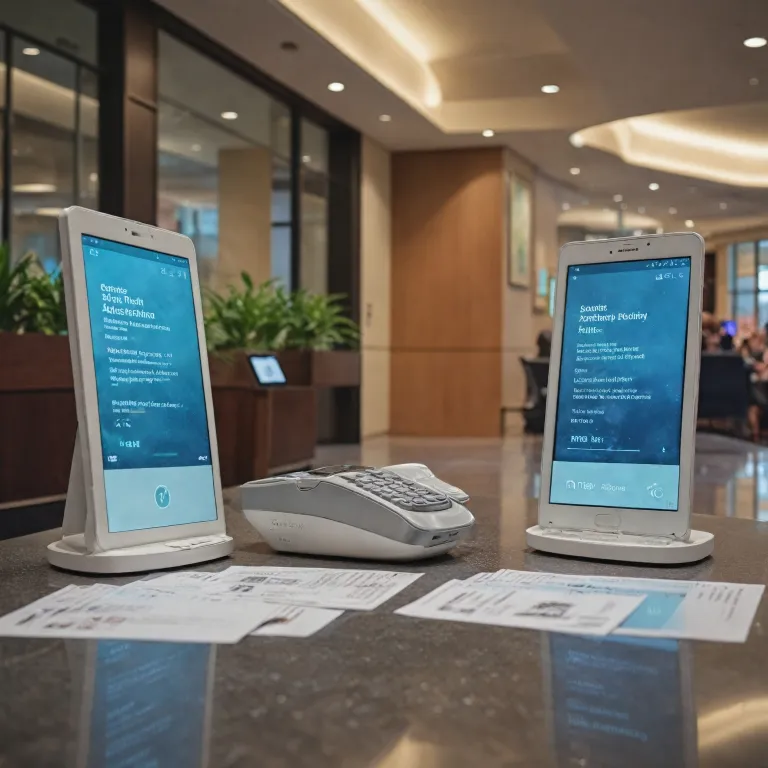
Media MICE and the rise of guest centric mobile ecosystems
In the global hospitality industry, Media MICE has become a strategic laboratory for testing hospitality industry mobile applications at scale. For event organizers and hotel sales teams, each guest now arrives with a mobile device that shapes expectations, defines the guest experience, and reframes how hotels design services. This shift forces hospitality businesses and destinations to treat every app as a core layer of the MICE value proposition, not a side project.
Media MICE venues increasingly deploy a hotel branded mobile app that connects pre event, in stay, and post stay touchpoints in real time. These mobile apps centralize booking, check in, room access, and guest communication, while also integrating event agendas, floor plans, and live updates for delegates. When the mobile app is well designed, it becomes a guest app that quietly orchestrates operations, enhancing guest satisfaction and supporting revenue focused hospitality businesses.
For hotel guests attending congresses or B2B events, guest apps and other mobile applications reduce friction from the first contact. A hotel guest can use a mobile app to complete check in, select a room type, and access digital keys without queuing at reception. This guest facing approach aligns with the wider hospitality industry trend where hospitality industry mobile applications are now expected tools, not optional services, especially in high volume Media MICE environments.
Designing guest apps around the MICE journey, not just the room
Most hospitality industry mobile applications were originally built around the individual room and classic leisure stays. Media MICE operations, however, demand guest apps and mobile apps that understand group arrivals, complex agendas, and multi venue logistics. For event planners, the real value of a mobile app lies in how it supports the entire guest experience from airport transfer to final check out.
In practice, a hotel guest attending a congress expects the hospitality app to provide personalized schedules, push notifications for session changes, and real time updates on transfers or room changes. These mobile applications must integrate with event registration tools and hotel operations systems to streamline operations and avoid conflicting data. When apps hospitality solutions are fragmented, both guests and hotels lose time, and operational efficiency suffers across departments.
Media MICE destinations that invest in coherent guest communication through a single guest app gain a clear competitive edge. The same mobile apps that manage room preferences can also handle meeting room bookings, catering requests, and last minute technical services. By aligning app development with the full MICE journey, hospitality businesses transform hospitality industry mobile applications into strategic tools for enhancing guest experiences and supporting large scale events.
From check in to check out, orchestrating real time MICE operations
In Media MICE hubs, the check in moment has become a critical test for hospitality industry mobile applications. A smooth mobile check process reassures each guest that the hotel, the venue, and the event organizers are technologically aligned. When hundreds of hotel guests arrive within a short time window, guest apps and mobile apps can dramatically streamline operations at the front desk.
Through a single mobile app, a hotel guest can confirm arrival time, upload identification, and receive a digital room key in real time. This reduces queues, frees staff to focus on personalized service, and improves guest satisfaction during peak MICE arrivals. For hotels, the same mobile applications feed live data into back office tools, allowing housekeeping and technical teams to prioritize rooms and meeting spaces more intelligently.
During the stay, guest apps support operational efficiency by centralizing requests for services such as room service, maintenance, or late check out. In Media MICE contexts, apps hospitality platforms also route requests related to meeting room setups, audiovisual services, and catering adjustments. By using hospitality industry mobile applications as guest facing control panels, hospitality businesses can enhance the guest experience while maintaining tighter control over time sensitive MICE operations.
Personalized, guest facing services for high value MICE delegates
Media MICE events bring together high value guests whose expectations for personalized and digital services are particularly elevated. Hospitality industry mobile applications allow hotels and venues to translate data into concrete, guest facing benefits that feel both discreet and efficient. For example, a guest app can remember a hotel guest’s preferred room temperature, pillow type, or dietary restrictions, then apply these preferences automatically at each stay.
When mobile apps are connected to IoT enabled room controls, the guest experience becomes more fluid and intuitive. A mobile app can act as a remote control for lighting, curtains, and climate, while also offering personalized content about the event program. These mobile applications support enhancing guest comfort, but they also help hospitality businesses collect anonymized insights that guide future app development and service design.
For event organizers, guest apps and other apps hospitality tools can segment communications by delegate type, language, or track, improving guest communication without overwhelming attendees. Push notifications in real time can highlight networking sessions, sponsor activations, or last minute room changes, all within the same mobile app that manages the hotel room. In Media MICE destinations, such integrated hospitality industry mobile applications are becoming a decisive factor in venue selection for large congresses.
Media MICE destinations, integrated technology, and operational efficiency
Media MICE destinations that align hotels, venues, and tourism offices around shared hospitality industry mobile applications create a seamless ecosystem for organizers. In Thailand, for example, modern venues and Thai hospitality are increasingly promoted through digital platforms that highlight how mobile apps support MICE logistics and guest experiences ; this dynamic is explored in detail in this analysis of Media MICE event venues and Thai hospitality. When multiple hotels and venues share compatible guest apps or interoperable mobile applications, planners gain better visibility over room blocks, transfers, and on site services.
Hospitality businesses in these destinations rely on mobile apps and guest apps to coordinate services across properties, from check in to meeting room turnover. A hotel guest may move between several hotels and venues during a single Media MICE event, yet still use one mobile app or a family of apps hospitality solutions. This interoperability enhances guest satisfaction and supports operational efficiency by reducing duplicated data entry and manual coordination.
For technology providers, Media MICE represents a demanding environment that pushes app development toward more robust, scalable architectures. Hospitality industry mobile applications must handle spikes in real time traffic, multilingual guest communication, and complex permissions for different services and tools. As these mobile applications mature, they increasingly serve as reference models for other segments of the hospitality industry seeking to streamline operations and improve the guest experience.
Strategic metrics, adoption trends, and the future of guest apps
The rapid adoption of hospitality industry mobile applications in Media MICE environments is closely tied to measurable performance indicators. Organizers and hospitality businesses now track how many hotel guests use a mobile app for check in, how often guest apps are opened during an event, and which services generate the highest engagement. These metrics inform app development roadmaps and help quantify the impact of mobile applications on guest satisfaction and operational efficiency.
Across the wider hospitality industry, data shows that a majority of travelers rely on mobile devices for planning, booking, and in stay services. This behavior translates directly into expectations that hotels and venues will provide robust mobile apps, guest apps, and other apps hospitality solutions. In Media MICE, where time is compressed and schedules are dense, the ability to manage the guest experience through a single mobile app becomes a critical differentiator.
As hospitality industry mobile applications evolve, Media MICE stakeholders will increasingly view guest facing technology as a shared investment rather than a property level experiment. Hotel guests, event organizers, and destinations will collaborate with technology partners to refine guest communication, streamline operations, and support new forms of hybrid and multi venue events. For readers seeking a min read overview, the key message is clear ; in Media MICE, mobile applications are no longer optional tools but central instruments for enhancing guest experiences at scale.
Key statistics on hospitality industry mobile applications for MICE
- Around 65 % of travelers now use mobile devices for travel planning, which reinforces the strategic importance of hospitality industry mobile applications in Media MICE.
- It is projected that 80 % of hotel bookings will be made via mobile devices, pushing hotels and venues to refine every mobile app and guest app touchpoint.
- Approximately 45 % of hotel guests prefer mobile check in and check out, confirming that guest apps and mobile apps are central to the modern guest experience.
- About 85 % of international tourists use a mobile device during their trip, creating fertile ground for apps hospitality solutions that enhance guest communication.
- Nearly 70 % of last minute bookings are completed on a mobile device, underlining how mobile applications influence both revenue management and operational efficiency.
Frequently asked questions about hospitality industry mobile applications in Media MICE
What percentage of travelers use mobile devices for travel planning ?
Approximately 65 % of travelers use their smartphones for travel planning, which confirms that hospitality industry mobile applications and guest apps are now essential tools for Media MICE organizers and hotels.
How many hotel bookings are expected to be made via mobile devices ?
It is projected that 80 % of hotel bookings will be made via mobile devices, meaning that every hotel guest will increasingly interact with a mobile app or guest app before arriving at a Media MICE venue.
Do travelers prefer mobile check in and check out services ?
Yes, 45 % of hotel guests prefer mobile check in and check out services, which encourages hospitality businesses to invest in apps hospitality platforms that streamline operations and enhance the guest experience.
Do travelers prefer using a hotel application for booking ?
Yes, around 74 % of travelers say that they would prefer using a hotel application for booking and other details, reinforcing the role of hospitality industry mobile applications as guest facing gateways to services and tools.
What percentage of last minute bookings are done using a mobile device ?
Nearly 70 % of last minute bookings are done using a mobile device, which highlights how mobile apps and guest apps influence both guest satisfaction and real time decision making in Media MICE contexts.