From cost center to brand engine: redefining banquet management
In Média MICE, the banquet is no longer a back-of-house afterthought. A hotel that treats banquet management as a brand engine turns every banquet event into a live demonstration of its positioning and pricing power. When a general manager aligns the banquet manager, sales director and head chef around one narrative, the group-sales pitch stops competing only on rate and starts competing on differentiated guest experience.
For a 300-room hotel, the banquet room is often the largest physical stage the brand owns. That room, the adjacent pre-function spaces and even the bar manager’s lobby bar become a coherent canvas when food, beverage and service are designed as one storyline. The manager who still sees the banquet as a volume job will lose events to properties that sell a distinctive guest experience anchored in local food beverage identity and a clearly defined banquet positioning.
Operationally, this shift changes the manager job description across the F&B hierarchy. The restaurant manager, the manager restaurant for outlets, the sous chef and the assistant banquet manager must all think like marketers, not just operators. In Média MICE destinations, the best performing hotels use their management system and hotel management data to track which banquet events convert repeat events and which concepts underperform on customer experience and margin. One Asia-Pacific city hotel, for example, lifted Média MICE banquet revenue per available room by 11% in 12 months simply by standardizing three signature concepts and measuring repeat-booking rates per concept.
Designing a signature banquet concept rooted in place
A signature banquet concept starts with a clear story about the locale, not with a long event order template. The director of food beverage and the head chef should walk the neighborhood markets, talk to local producers and translate that research into a menu narrative that sales can sell repeatedly. When banquet managers and restaurant managers co-create this story, the result feels authentic rather than themed and becomes easier to scale across multiple Média MICE segments.
Think of a coastal Média MICE hotel where the banquet room opens onto a terrace facing the harbor. The banquet manager and bar manager can build a "harbor at dusk" concept with small-plate seafood stations, low-alcohol beverage options and lighting that shifts with the sunset. That concept then lives inside every banquet event order, with clear notes on beverage stock, inventory control and service choreography so operations can execute consistently at scale. A concise banquet event order template that highlights timing, service style and upsell options helps the équipe repeat the same high-impact experience without improvisation.
To protect margin, the manager banquet and sous chef must standardize portions, prep flows and staffing patterns for both small and large events. A robust management system lets the manager track food cost, beverage stock variance and labor per guest across multiple events using the same concept. In one internal benchmark shared by a European conference hotel, tightening portion control on a signature buffet reduced banquet food cost percentage from 34% to 30% while maintaining guest satisfaction scores above 4.6/5. For a deeper dive into how the banquet event order becomes the control tower for this, see this analysis on tightening the kitchen-to-floor handoff for large groups.
Using F&B storytelling in RFPs and Média MICE sales conversations
Most RFP responses still treat banquet management as a spreadsheet of menus and prices. A hotel that wants to win high-value Média MICE events needs to answer with a story about how its banquet event concept keeps delegates engaged, energized and on brand. That means the sales director, banquet manager and marketing team must collaborate on narrative, not just on numbers, and translate operational strengths into clear value propositions for planners.
Instead of listing "three-course plated dinner" as a line item, describe how the head chef sequences food and beverage to support the event agenda. Explain how the bar manager manages beverage stock to keep queues short and networking fluid, and how the assistant manager adjusts service pacing when sessions overrun. Link to operational intelligence that planners care about, such as agenda-timed lighting and F&B for multi-day conferences, and show how your banquet room setup and menu design actively fight the 14h energy crash. One corporate planner recently summarized a successful bid this way: "We chose the hotel whose banquet team could explain exactly how coffee breaks, lighting and menu design would keep our delegates awake after lunch."
For Média MICE planners, the best RFP answer reads like a behind-the-scenes tour led by the restaurant manager and banquet managers, not a brochure. They want to know which room has natural light for the working lunch, how the management system supports last-minute dietary changes and how the manager restaurant coordinates with the sous chef when a keynote runs long. When your hotel management narrative addresses these operational realities and references concrete KPIs such as upsell conversion or repeat-event ratio, your banquet management story becomes a decisive sales edge.
Balancing creativity, scale and margin in banquet operations
Creative banquet menus impress on site visits, but only disciplined operations protect profit when 800 delegates sit down at once. The manager job for a modern banquet manager is to translate the head chef’s ideas into repeatable processes that work for multiple events per day. That requires tight coordination between kitchen, service, sales and back-of-house logistics, supported by clear standard operating procedures and realistic capacity planning.
Every banquet event should have a clear playbook that covers food production, beverage stock levels, room turns and cleaning standards. In large Média MICE venues, even rope-access cleaning for high atriums can affect how quickly a room resets between events, as explored in this article on how rope-access commercial cleaning reshapes MICE venue operations. The banquet manager, bar manager and restaurant manager must integrate these constraints into the event order so that service standards and customer experience stay consistent, even when the schedule compresses.
Margin discipline lives in details like inventory control, batch-prep design and realistic staffing models for each job role. A strong management system helps the manager banquet and sales director compare forecast versus actual for food beverage cost, labor and upsell revenue per guest across similar events. Over time, this data lets hotel management refine which banquet management concepts are truly the best performers and which should be retired, long before negative feedback appears on job boards or planner forums. One chain-level review found that retiring two low-margin banquet packages and pushing a higher-yield concept improved average banquet contribution margin by 4–6 percentage points across three urban Média MICE properties.
Dietary inclusivity, delegate energy and visual merchandising
For Média MICE clients, dietary inclusivity is no longer a nice-to-have; it is a baseline expectation. A hotel that embeds inclusive food and beverage design into its banquet management wins trust from organizers who manage complex guest profiles. The banquet manager and head chef should map vegetarian, vegan, gluten-free and allergen-safe options into every banquet event, not treat them as last-minute substitutions, and should test how these dishes perform in terms of plating time and guest satisfaction.
Delegate energy management is equally strategic, especially for multi-day events with dense agendas. The restaurant manager and sous chef can design menus that modulate sugar, caffeine and portion sizes across the day, while the bar manager curates low-alcohol and alcohol-free beverage stock that supports networking without fatigue. When the assistant manager trains the service équipe to explain these choices at the table, the customer experience feels intentional rather than restrictive. In internal post-event surveys from one regional Média MICE venue, 72% of delegates reported feeling "less tired than usual" when the F&B program was explicitly designed around energy management.
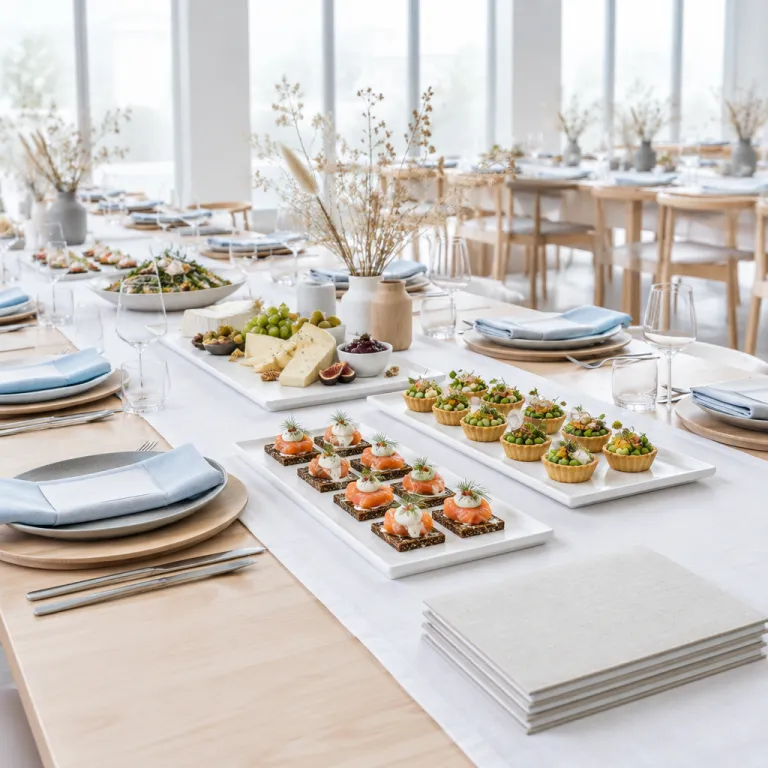
Finally, photographing and merchandising your signature banquet concepts turns them into tangible sales tools. Invest in professional shoots that show the banquet room in real event conditions, with realistic table spacing, service in motion and the head chef visible as part of the brand. Those images, paired with precise descriptions of operations, management roles and guest benefits, help the sales director and banquet managers turn every banquet menu into a compelling brand statement in Média MICE pitches. A small gallery of before-and-after room setups, annotated with notes on service flow and banquet event order design, can also serve as a powerful visual aid during site inspections.
FAQ
How can a hotel general manager align banquet management with overall brand strategy ?
The general manager should convene the banquet manager, head chef, restaurant manager and sales director to define a shared F&B narrative that reflects the hotel’s positioning. This narrative then guides menu design, room setups, service standards and marketing materials for all Média MICE events. Regular reviews using management system data ensure that banquet operations, guest feedback and financial results stay aligned with the brand, with clear targets for banquet food cost percentage, upsell revenue and repeat-event conversion.
What metrics matter most when evaluating banquet event performance in Média MICE ?
Key metrics include food and beverage cost percentage, revenue per guest, upsell conversion, labor hours per event and post-event satisfaction scores from organizers and delegates. Inventory control accuracy for beverage stock and critical ingredients is also essential to protect margin. Tracking repeat events and referrals linked to specific banquet concepts helps hotel management see which ideas truly drive long-term business and which banquet event order templates should be refined or replaced.
How should hotels handle dietary restrictions at scale without slowing service ?
Hotels should design every banquet menu with built-in vegetarian, vegan, gluten-free and allergen-aware options that can be plated at the same speed as standard dishes. The banquet event order must clearly flag counts and table positions, and the assistant manager should brief the service équipe with visual aids and table maps. A coordinated approach between the head chef, sous chef and banquet manager keeps inclusivity high while maintaining smooth service and predictable banquet food cost benchmarks.
What role does photography play in selling banquet concepts to Média MICE planners ?
High-quality photography turns abstract menu descriptions into concrete, memorable concepts that planners can visualize in their own events. Images of the banquet room in real setups, with visible food presentation and service flow, help the sales director and banquet managers explain how the experience will feel for delegates. These visuals should be integrated into RFP responses, site-visit decks and digital marketing to reinforce the hotel’s F&B brand and demonstrate how the banquet event order translates into a lived experience.
How can banquet managers collaborate more effectively with sales and marketing teams ?
Banquet managers should participate in key sales meetings, RFP strategy sessions and post-event debriefs, not just operational briefings. Joint workshops with marketing can translate operational strengths into clear value propositions and storytelling for Média MICE audiences. Shared dashboards from the management system give everyone a common view of performance, helping the équipe prioritize the best banquet concepts for future events and align pricing, positioning and banquet management processes.