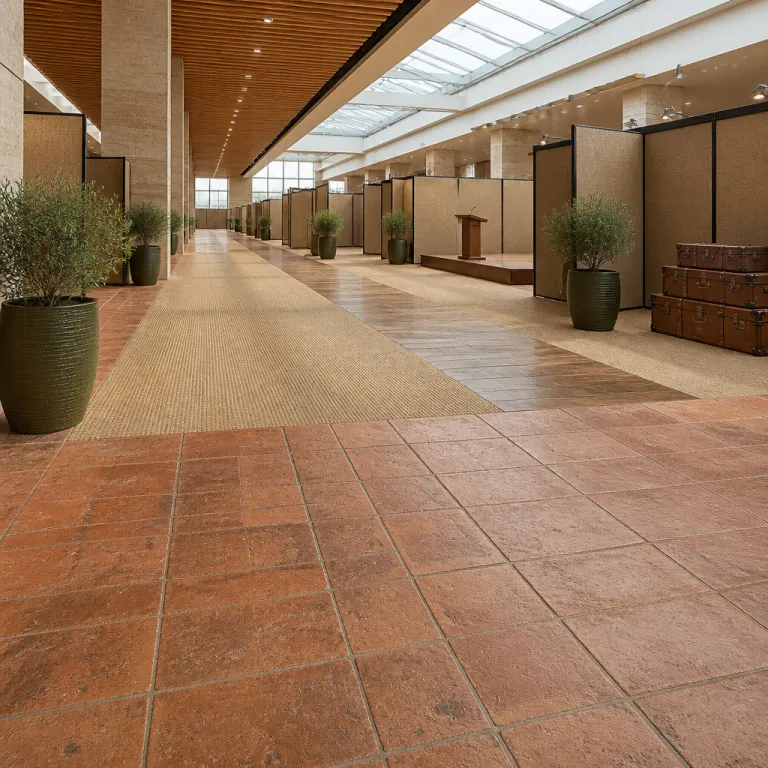
MICE industry news as a strategic radar for global stakeholders
MICE industry news now functions as a real-time radar for every serious event organizer and tourism board. As rapid shifts in the global MICE market transform meetings, incentives, conferences and exhibitions, decision makers in hotels, venues and destinations need curated analysis rather than fragmented headlines. For B2B agencies and commercial hotel teams, the ability to read and interpret this stream of sector updates has become a core strategic skill.
Across the wider tourism industry, the MICE segment already represents hundreds of billions of dollars in annual travel spend, and recent data on global MICE market size and annual growth confirms a robust upward trajectory. When you follow structured industry coverage, you see how meetings, incentives and other event formats are evolving by region, from Europe and North America to Asia and the Middle East, with each market reacting differently to economic cycles and geopolitical risk. This is where specialized reporting on MICE tourism and global events provides context that generic business news simply cannot offer.
Professional media outlets now combine surveys, interviews and data analysis to track business events and their impact on each destination. They work closely with event organizers, venue managers and service providers to surface case study material that shows how specific meetings or conferences and exhibitions changed a city’s positioning in the global MICE ecosystem. As one senior planner notes, “I treat my daily MICE news feed like a market dashboard, not a magazine.” For readers in charge of event planning, this kind of structured content turns every article you read into a practical briefing for your next group or convention.
How media coverage shapes destination choice and venue strategy
For a tourism board or convention bureau, being visible in high-quality MICE-focused media is now as critical as attending a trade show. When planners read venue-focused features that compare a convention centre in Europe with a waterfront hotel cluster in North America, they are quietly updating their internal shortlist of destinations. Over time, this repeated exposure in trade publications influences which city receives the next large-scale meetings and events rotation.
Destination marketing organizations increasingly pitch case study stories to specialized outlets, highlighting how a particular event type brought measurable tourism benefits and long-term travel demand. A well-crafted article on MICE tourism can show how a medical convention filled a new convention centre in July, boosted hotel occupancy by double digits and generated repeat group bookings in the following seasons. Such business travel stories often include practical details on access, venue layout and local partners, which makes them highly actionable for event planning teams.
Hotels near flagship venues also leverage editorial coverage to position themselves as strategic stays for complex business events. For example, content about strategic stays for media driven MICE planners in hotels near a major convention centre illustrates how accommodation strategy is now part of the narrative. When planners read such coverage, they gain concrete ideas on room block design, meetings and incentives packages and how to align venue capabilities with group expectations across different global MICE markets.
Media MICE in hospitality: from content hub to decision engine
Within the hospitality industry, specialized outlets focused on MICE-related reporting have evolved from simple news feeds to acting as a decision engine for planners. Platforms dedicated to business events now aggregate global calendars, venue openings and CAGR forecast analyses into structured formats that hotel sales teams and event organizers can use in their daily work. This shift is reinforced by innovation such as AI-driven trend analysis, which helps identify emerging meetings and events patterns before they become mainstream.
One striking example is the way scientific and academic conferences and exhibitions are covered as strategic levers for destinations. Editorial features on events like a major annual conference in Florence reshaping media driven MICE strategies show how a single convention can reposition a city in the global MICE hierarchy. In that case, a three-day life sciences meeting reportedly attracted more than 2,000 delegates, generated an estimated 4.5 million USD in direct visitor spend and helped secure two additional association bids within eighteen months; these figures are illustrative and should be cross-checked against official post-event reports. For tourism boards, such coverage is more than news; it becomes a reference document when negotiating future meetings and incentives or bidding for rotating association events.
Media MICE outlets also serve as a bridge between hotel revenue managers, venue operators and B2B agencies by publishing detailed case study content. These articles often dissect how a specific MICE event type was priced, how the group used the convention centre and how ancillary tourism activities were integrated into the program. As one revenue director explains, “When a case study includes real numbers, I can turn that story into next year’s budget assumptions.” When stakeholders read these analyses, they gain operational insights that go far beyond generic industry updates and can be applied immediately to their own event planning processes.
Regional lenses on global MICE: Europe, Asia Pacific, North America and the Middle East
Reading MICE-related coverage through a regional lens is essential for anyone managing international meetings and events portfolios. Europe remains a mature market with dense convention centre infrastructure, while North America combines large-scale convention cities with resort-style MICE tourism destinations. Asia Pacific and the Middle East, by contrast, are characterized by rapid venue development, ambitious tourism board strategies and aggressive bidding for global events.
In Asia, trade media often highlights how cities like Singapore, Bangkok or Seoul use integrated meetings and incentives programs to attract high-value groups. A detailed article on how an airport-linked convention centre in Asia Pacific supports media driven MICE strategies, such as the analysis available on airport community focused MICE strategies in Singapore, shows how infrastructure and media narratives intersect. For planners, such regional reporting helps them match each event type with the right destination and venue profile.
Coverage of the Middle East often emphasizes iconic venues, large-scale global events and ambitious CAGR forecast figures for the regional MICE market. Tourism boards in cities like Dubai, Abu Dhabi or Doha use editorial storytelling to underline their capacity for mega events, while also promoting smaller meetings that fill shoulder periods. When you read venue-focused features from these regions, you see how hotels, convention centres and local service providers coordinate to position themselves as reliable partners for complex group travel logistics.
From headlines to KPIs: using MICE news in event planning and hotel strategy
For event organizers and hotel commercial teams, the real value of MICE-related news lies in how it informs concrete decisions. Each article on meetings and events, MICE tourism or conferences and exhibitions can be translated into KPIs for sales, marketing and operations. The key is to read beyond the headline and extract data points on attendance, spend per delegate, event type mix and venue utilization.
When media outlets report that the global MICE market size has reached around 805 billion USD with an annual growth rate close to 7.5 percent, they are not just sharing a macroeconomic figure. According to a Statista market size estimate for the global meetings, incentives, conferences and exhibitions sector (2023) and an IBISWorld industry outlook on convention and trade show organizers (2022), these numbers indicate sustained expansion; readers should always consult the original reports for exact definitions and methodologies. They are also signaling that competition for high-value business events will intensify across destinations, and that hotels must refine their meetings and incentives offerings to capture a larger share of this travel segment. For tourism boards, such market intelligence supports budget allocations for bidding, promotion and infrastructure, especially when combined with regional CAGR forecast analyses.
Operationally, planners can use case study articles to benchmark their own event planning practices. A detailed breakdown of how a group used a convention centre, structured its meetings schedule and integrated tourism experiences into the program offers a template that can be adapted to other venues. To make this translation from story to strategy easier, many teams now use a simple checklist when reading MICE industry coverage:
- Attendance and room nights: total delegates, peak night pickup, average length of stay.
- Revenue metrics: spend per participant, F&B share, ancillary tourism and sponsorship income.
- Event mix: proportion of plenary sessions, breakouts, incentives activities and exhibitions.
- Venue usage: space configuration, technology requirements and on-site service levels.
- Destination impact: seasonality, compression effects and potential for repeat group demand.
Future facing media trends in the MICE ecosystem
The next wave of MICE industry coverage will be defined by deeper data integration and more segmented storytelling. Media platforms are already using AI to scan thousands of global events, categorize them by event type and region, and surface patterns in meetings and events demand. For readers, this means that every time they read venue or destination coverage, they will see clearer links between market trends and operational implications.
Hybrid formats and virtual components remain prominent in conferences and exhibitions, but the editorial focus is shifting toward how these formats coexist with in-person MICE events. Articles now explore how hotels and convention centres design spaces that support both physical meetings and high-quality streaming, especially for groups with participants spread across Europe, Asia Pacific, North America and the Middle East. This kind of industry reporting helps planners choose the right venue for each group profile and travel pattern, rather than treating hybrid as a one-size-fits-all solution.
Sustainability is also moving from a niche topic to a central narrative in MICE tourism media coverage. Destinations and tourism boards are increasingly evaluated on their ability to host global business events with lower environmental impact, from energy-efficient convention centres to responsible local tourism activities. As stakeholders continue to read and share these stories, the entire industry will feel pressure to align meetings and incentives and event planning practices with measurable sustainability standards.
Key figures shaping media driven MICE strategies
- The global MICE market size has been estimated at around 805 billion USD in recent Statista analyses (Global MICE Industry – Market Size, 2023), underscoring why hotels, venues and tourism boards treat business events as a strategic pillar rather than a niche segment.
- An annual growth rate of approximately 7.5 percent for the wider MICE industry, reported in IBISWorld industry outlooks on convention and trade show organizers (2022), indicates a strong CAGR forecast that justifies continued investment in convention centres, meeting hotels and destination marketing.
- Industry associations and research firms now publish monthly updates, quarterly reports and annual reviews, giving trade media a steady flow of market intelligence that planners can translate into concrete event planning decisions.
- Survey-based insights show a sustained rise in virtual and hybrid meetings and events, which pushes venues to upgrade audiovisual infrastructure and integrate digital services into their MICE tourism offerings.
- Rapid industry changes, combined with global events volatility, make structured MICE-focused reporting essential for improved decision making across event organizers, hotel commercial teams and tourism boards.
FAQ about MICE industry news and media in hospitality
How should event organizers use MICE industry news in daily planning ?
Event organizers should treat MICE-related news as a planning tool, extracting concrete data on attendance, spend, event type mix and regional demand to refine their own meetings and events strategies and venue selection.
Why is specialized media important for tourism boards and destinations ?
Specialized media gives tourism boards and destinations a platform to showcase case study success stories, position their convention centres and hotels, and influence how global MICE planners perceive their competitiveness.
What role does AI play in modern MICE media coverage ?
AI helps media outlets analyze large volumes of global events data, identify emerging trends in MICE tourism and meetings and incentives, and produce more targeted industry news that stakeholders can apply directly.
How can hotels benefit from being featured in MICE industry news ?
Hotels that appear in well-read venue and destination features gain visibility with high-value group and convention clients, which can translate into increased bookings for meetings and events and related travel.
What is the best way to stay updated on MICE trends ?
The most effective approach is to subscribe to reputable industry newsletters, attend webinars hosted by media outlets and regularly read MICE industry coverage that focuses on your key markets in Europe, Asia Pacific, North America and the Middle East.