Designing next‑generation venues for special education conferences 2026
Why special education conferences demand a new generation of venues
Special education conferences now sit at the crossroads of pedagogy, technology, and inclusive design. For MICE leaders and venue sales teams, this means every conference layout, every convention center corridor, and every media touchpoint shapes how educators experience professional learning. The stakes are high because these education conferences directly influence classroom strategies for exceptional children and students with disabilities in both special education and general education settings.
Unlike a generic education conference, an annual conference dedicated to special education requires a venue that behaves like a living laboratory. Event organizers must orchestrate professional learning environments where instructional sessions, hands-on workshops, and expo council zones coexist without noise bleed, sensory overload, or accessibility gaps for teachers, administrators, and disability advocates. When you plan special education conferences 2026 in this context, the chosen location becomes a strategic asset for professional development rather than a neutral backdrop for conferences and meetings.
For destinations and venues, this shift transforms the convention expo from a simple trade floor into a curated ecosystem. Congress and exhibition venues that succeed with education professionals and school leaders integrate quiet reflection areas, flexible teaching studios, and media-ready stages for CEC convention keynotes or a national conference plenary. In Media MICE terms—here meaning the full mix of on-site media production, content capture, and distribution—the venue becomes both a content hub and a broadcast platform, amplifying education conference narratives about early childhood, general education inclusion, and Council for Exceptional Children policy debates.
Media MICE as a strategic layer in special education congress design
Media MICE in the hospitality industry now extends far beyond signage and a basic conference app. For special education conferences 2026, professional organizers are layering live streaming, podcast studios, and micro content capture zones directly into the convention center floorplan to serve participants who cannot attend every session. This media-centric approach allows education conferences to reach wider networks of school districts, early childhood specialists, and education administrators who follow the event remotely.
When planning a CEC convention, a CASE leadership summit, or a CTA education conference, the media strategy should be defined at the same time as the rooming list and the march location logistics. A venue that already supports hybrid instructional sessions, caption-ready streaming, and assistive listening technologies will reduce technical risk for the organizing team and improve professional learning outcomes. This is particularly relevant for events like the CEC annual conference, where themes such as “Innovative Access; Innovation Redefined” and “Beyond the Labels: Rewriting the Story of Special Education” require flawless audiovisual support and inclusive media formats.
Destinations that position themselves as media-ready education conference hubs can draw on examples from markets like Singapore, where premium Media MICE conference venues demonstrate how integrated studios, flexible convention expo halls, and broadcast control rooms enhance sponsor value. For special education conferences, this means exhibitors focused on assistive technologies, early childhood tools, and professional development platforms can run live demos, record instructional strategies, and host Council for Exceptional Children–style interviews on site. As one conference producer noted after a recent hybrid event, “Our venue’s built-in studio turned every workshop into reusable training content for districts.” The result is a richer content archive that school systems can add to their calendar of professional learning resources long after the conference closes.
Designing congress and exhibition venues around inclusive learning journeys
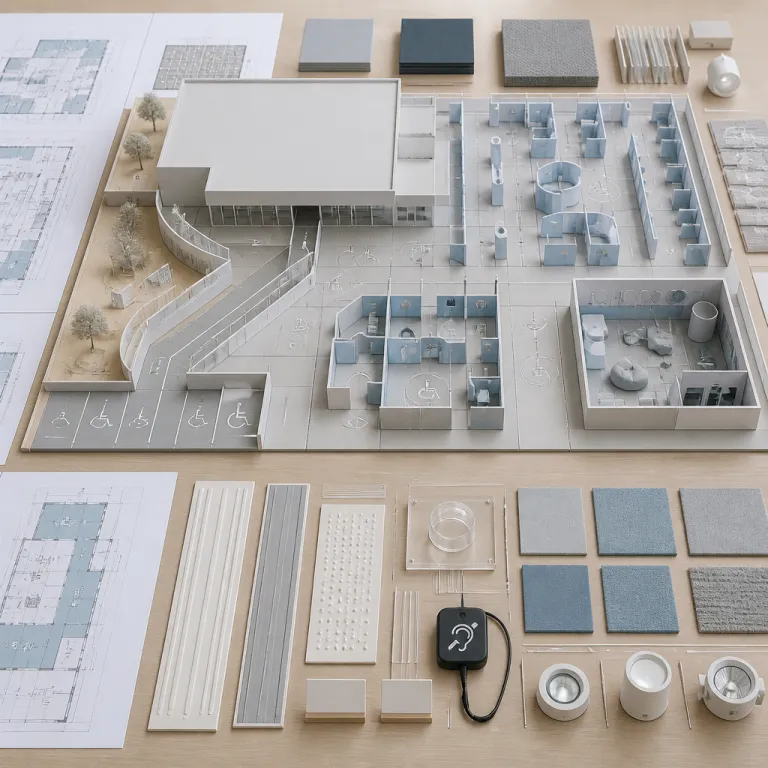
Inclusive design for special education conferences 2026 starts with mapping the learning journey of participants across the entire convention center. From the first registration touchpoint to the final national conference plenary, every transition should support cognitive ease, physical accessibility, and professional networking. This requires close collaboration between venue operations, MICE planners, and education leaders who understand both special education and general education realities.
In practice, this means zoning the convention expo and education conference sessions according to sensory intensity and instructional format. High-energy expo council areas showcasing assistive technologies and early childhood materials should be balanced with quiet lounges where education administrators can debrief complex teaching strategies or review research on students with disabilities. Congress venues that already host science or biotech events, such as those highlighted in analyses of next generation congress venues, offer useful models for flexible layouts, modular stages, and data-driven crowd management.
For Media MICE stakeholders, the goal is to align physical space, media infrastructure, and education content into a coherent narrative. A CEC convention or ACRES annual conference can, for example, route participants from plenary teaching sessions into smaller instructional workshops, then into themed networking pods for rural school leaders or early childhood specialists. When these flows are supported by clear wayfinding, inclusive signage, and real-time media updates, the venue itself becomes a teaching tool that models universal design principles for special education and classroom practitioners.
Matching US special education conference calendars with venue capabilities
The current calendar of special education conferences in the USA offers a clear framework for destinations and venues that want to attract this segment. Events such as the Council for Exceptional Children annual conference in Salt Lake City, the California Teachers Association special education conference in Garden Grove, and the Council of Administrators of Special Education national conference in Providence illustrate different scales and needs. Each conference will require a location that can support both high-volume plenary sessions and intimate professional learning labs for educators.
For the CEC annual conference, which recently welcomed around 5,000 attendees according to the Council for Exceptional Children’s 2023 annual report, the convention center must handle complex room blocks, extensive instructional sessions, and a large convention expo focused on exceptional children. Organizers will expect robust accessibility features, from wheelchair-friendly circulation to quiet rooms for participants who work closely with students with disabilities and may themselves require sensory-friendly spaces. When planners add the event to their internal calendar tools, they also evaluate how the destination’s transport, hotel inventory, and school district proximity support year-round education conferences and professional development retreats.
Smaller events, such as the ACRES gathering focused on rural special education, may prioritize flexible mid-scale congress venues that can host both classroom teachers and district leaders in a more intimate setting. Here, the ability to configure rooms quickly for mixed general education and special education sessions becomes a competitive advantage for venues. A recent ACRES programme, for example, alternated between plenary discussions on rural inclusion and hands-on labs for assistive technology, requiring rapid room flips. For all these conferences, destinations that align their Media MICE storytelling with concrete venue capabilities will stand out in bids, especially when they can demonstrate past success with education conference clients and education administrator delegations.
Hospitality, accessibility, and professional development as a single value proposition
Hospitality for special education conferences 2026 must be defined as more than comfortable beds and efficient check-in. For this audience, hospitality means that every hotel, convention center, and partner venue understands the daily realities of classroom practitioners, school leaders, and Council for Exceptional Children advocates. When a destination aligns its service culture with the goals of professional development, it becomes a true partner in advancing special education and general education inclusion.
Practically, this can involve training front-line staff to support guests who work with students with disabilities, ensuring that signage and digital interfaces are accessible, and coordinating with organizers on quiet hours for participants recovering from intense instructional sessions. Venues that host an annual conference for special education leaders can also offer dedicated professional learning packages, including early childhood–focused site visits to local schools or meetings with education administrators from regional districts. These experiences turn a standard education conference into a living case study that participants can bring back to their own school systems.
From a Media MICE perspective, hospitality teams should collaborate with media crews to capture these learning journeys in respectful, consent-based formats. Short interviews with teachers, leaders, and exceptional children advocates can be recorded in designated media corners, then integrated into post-event education conference content libraries. When this content is framed within a broader narrative about inclusive hospitality, destinations strengthen their reputation as preferred locations for national conference rotations and future CEC convention bids.
Revenue strategy, venue positioning, and the split in convention hotel categories
As convention hotel categories evolve, MICE strategists working on special education conferences 2026 must reassess where to place their headquarters properties. Recent analyses of how the convention hotel category is splitting, with headquarters properties pulling away from runway properties, show that venue positioning now directly affects both delegate experience and Media MICE potential. For education conferences, this split influences how easily participants can move between plenary halls, breakout rooms, and offsite professional learning visits.
Headquarters hotels attached to or adjacent to a convention center offer clear advantages for an annual conference serving special education and general education professionals. They simplify logistics for education administrators who may have mobility constraints, allow late-night strategy sessions for school leaders, and provide controlled environments for media interviews about students with disabilities and early childhood initiatives. When planners review options and assess the split between headquarters and runway properties, they should map these choices against the specific needs of CEC convention delegates and other Council for Exceptional Children stakeholders.
Runway properties, located farther from the main convention expo, can still play a role in hosting overflow attendees, exhibitors, or pre-conference instructional workshops. However, destinations that want to anchor a national conference or recurring education conference series should prioritize integrated precincts where media infrastructure, hospitality services, and education-focused venues operate as a single campus. In this model, organizers can schedule back-to-back sessions, networking events, and professional development labs without sacrificing accessibility, while also giving sponsors and expo council partners more predictable foot traffic across conferences.
Key statistics for special education conferences and venues
- The Council for Exceptional Children reported around 5,000 attendees at its recent annual conference, indicating that large-scale special education conferences require convention centers capable of handling high-density plenary sessions and extensive expo floors (CEC Annual Report, 2023).
- The California Teachers Association special education conference recently offered approximately 50 formal sessions, showing that education conferences in this segment demand a high number of parallel instructional rooms with reliable audiovisual infrastructure (CTA Special Education Conference Summary, 2023).
- Across major US special education events, core formats such as workshops, seminars, panel discussions, and exhibits remain dominant, which means congress venues must provide flexible spaces that can shift quickly between interactive teaching layouts and traditional lecture seating (aggregated organizer programme data, 2022–2024).
- Key themes such as inclusive education models, the use of AI in special education, and remote learning adaptations are now standard in national conference agendas, pushing venues to support robust connectivity and hybrid media capabilities for professional learning (programme analyses from recent US events, 2023–2024).
FAQ about special education conferences and MICE venues
What is the focus of the CEC 2026 Convention?
The focus of the CEC 2026 Convention is described as follows: “Themes include 'Innovative Access; Innovation Redefined' and 'Beyond the Labels: Rewriting the Story of Special Education.'” For venues and destinations, this means prioritizing inclusive design, advanced media capabilities, and flexible rooms that support both large plenaries and small instructional workshops. Organizers should ensure that every learning space models the same access principles promoted in the programme.
How can venues best support professional development at special education conferences?
Venues support professional development most effectively when they combine flexible room configurations, strong accessibility features, and reliable technology for hybrid learning. Congress centers that offer varied spaces for plenary sessions, breakout workshops, and quiet reflection zones help participants process complex content. Integrating on-site media studios also allows organizers to extend professional learning beyond the conference dates.
What should destinations highlight when bidding for special education conferences?
Destinations should highlight their accessible transport networks, inclusive hospitality standards, and proven experience with education conferences and national conference rotations. Demonstrating partnerships with local school districts, universities, and early childhood centers reassures organizers that professional learning visits can be integrated into the programme. Clear data on convention center accessibility and previous CEC convention or Council for Exceptional Children–style events strengthens the bid.
Are there virtual or hybrid options for these conferences?
Many special education conferences now offer virtual or hybrid attendance options, especially for education administrators who cannot travel. Organizers typically publish details on their official websites, including streaming access to key sessions and on-demand recordings for professional learning credits. Venues that already support high-quality hybrid production are more likely to be selected for future annual conference cycles.
How early should organizers secure venues for special education conferences 2026?
For large-scale events such as the CEC annual conference or CASE leadership meetings, organizers should secure convention center space and headquarters hotels at least two to three years in advance. This lead time allows destinations to coordinate accessibility upgrades, media infrastructure, and room configurations tailored to special education needs. Early contracting also gives school systems more time to add the conference to their internal calendar and secure travel approvals for educators.